
Diagnostics
How Digital Dental Scanning Helps During Treatment Planning
A small wand, a 3D model on screen, and no impression putty in many cases. Here is how scanning supports planning.
Dental Planet · · 3 min read
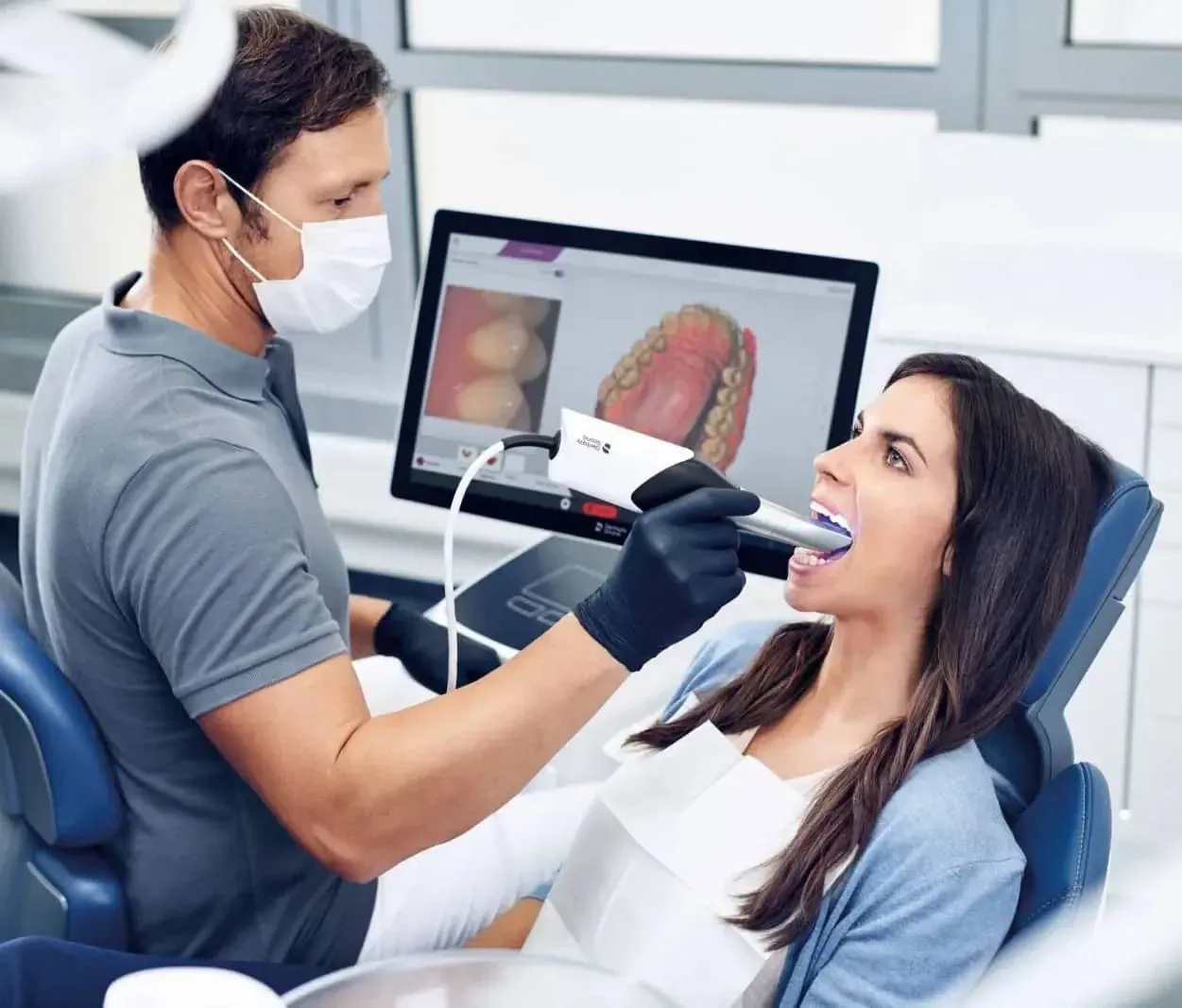
If you have ever had a dental impression taken with a tray of soft putty, you may remember the taste and the wait while it set. Digital intraoral scanning offers an alternative for many treatments. This article explains what scanning is and how it supports treatment planning.
What is an intraoral scan?
An intraoral scanner is a small handheld device about the size of a thick pen. As the dentist moves it over your teeth and gums, it captures many images and stitches them together into a detailed 3D model on a computer screen.
You can learn more on our digital scanning and X-ray service page.
What does it feel like?
Most people find scanning comfortable. The tip is moved gently around the teeth, and you can breathe and swallow normally. If you need a break, the dentist can pause and continue afterwards. A full-mouth scan usually takes a few minutes.
Scans compared with traditional impressions
Comfort
Scanning avoids the gag-inducing trays and putty that some patients find unpleasant.
Seeing your own teeth
Because the model appears on screen, your dentist can rotate and zoom in to show you worn areas, gaps or the shape of a prepared tooth. Many patients find this makes explanations easier to understand.
Digital records
Scans can be saved and compared over time, which can help monitor changes such as wear or tooth movement.
Retakes
If part of a scan is unclear, that section can often be rescanned without starting again.
Traditional impressions still have their place, and your dentist will choose the method that is most appropriate for your treatment.
Treatments that use scanning
Crowns and bridges
A scan records the prepared tooth and the bite so a crown or bridge can be designed to fit.
Clear aligners
Aligner treatment is planned digitally from a scan. The model is used to plan each stage of tooth movement, and you may be able to see a visual representation of the plan.
Dental implants
Scans, combined with X-rays, help plan the position of implants and design the final restoration.
Night guards and retainers
Custom appliances can be made from a digital model of your teeth.
Scanning and X-rays work together
A scan captures the surfaces of your teeth and gums, but it cannot see inside teeth or into bone. Dental X-rays provide that information. Together, they give your dentist a more complete picture for planning.
What scanning does not do
A scan is a planning tool, not a diagnosis on its own. It supports — but does not replace — a clinical examination and your dentist's judgement. It also does not guarantee a particular treatment outcome.
Your role in planning
Treatment planning is a shared process. Use the on-screen model as an opportunity to ask questions: What are you seeing? What are my options? What would you expect to change over time?
If you would like to know more about how we assess and plan treatment, read about our technology and facilities or book an appointment.
This information is general and educational. It does not replace an examination or individual advice from a qualified dental professional. Treatment suitability, risks, recovery and results vary from person to person.
Related treatments