
Root Canal Treatment in Surat
Advanced Root Canal Treatment
Root canal treatment removes infected or inflamed pulp from inside a tooth, cleans and shapes the canals, and seals them. The goal is to relieve symptoms and keep your natural tooth rather than removing it.
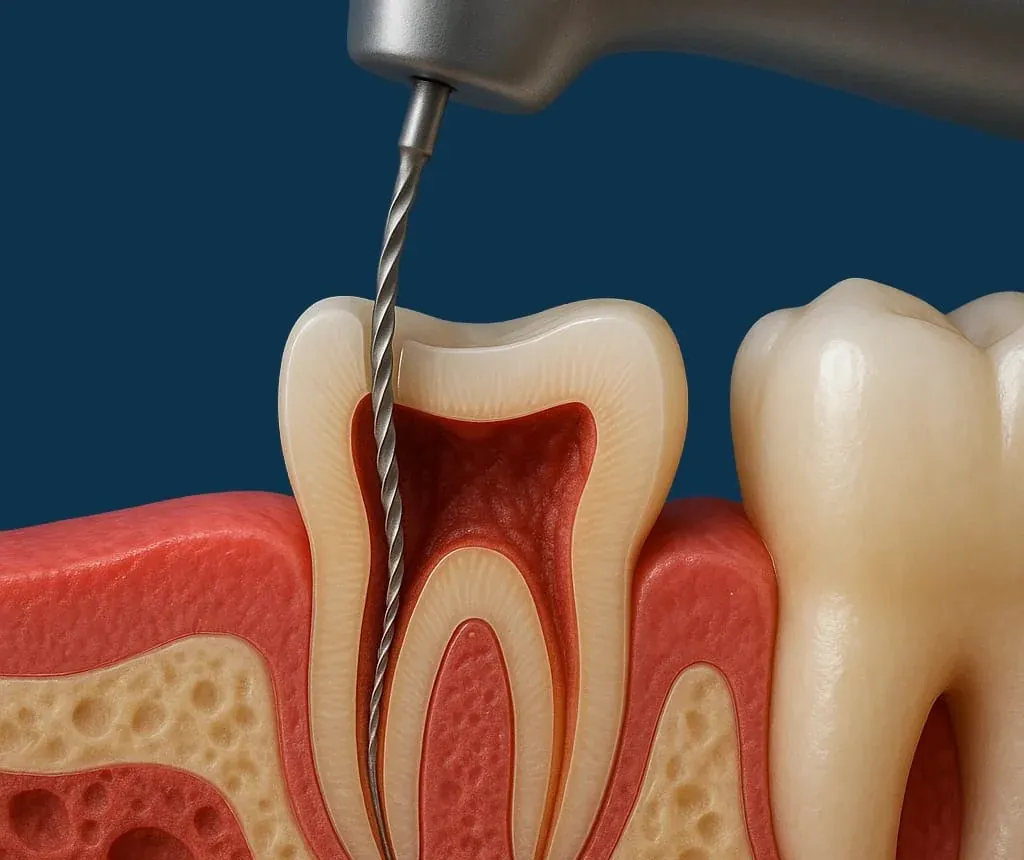
Treatment overview
Inside every tooth is the pulp — soft tissue containing nerves and blood vessels. Deep decay, cracks, repeated dental work or injury can lead to inflammation or infection of the pulp, which may cause pain, swelling or sensitivity, or sometimes no symptoms at all.
Treatment is carried out under local anaesthesia. Depending on the tooth and the extent of infection, it may be completed in one or more visits. Back teeth often need a crown afterwards to protect them.
Why patients discuss this treatment
- Lingering pain or sensitivity to hot or cold
- Pain when biting or chewing
- Swelling or a pimple-like spot on the gum near a tooth
- Darkening of a tooth after injury
- Infection found on an X-ray during a routine check-up
These are common reasons only. Only an examination can determine whether this treatment is appropriate for you.
Assessment & treatment journey
- 1
Diagnosis
Examination, tests and X-rays help determine whether the pulp is affected and whether the tooth can be saved.
- 2
Numbing & isolation
Local anaesthesia is given and the tooth is isolated to keep it clean and dry.
- 3
Cleaning & shaping
The infected pulp is removed and the canals are carefully cleaned, shaped and disinfected.
- 4
Sealing
The canals are filled and sealed; a temporary or permanent filling closes the access.
- 5
Restoration
A crown or final filling is placed to protect the tooth, as recommended by your dentist.
Potential benefits
- Aims to preserve your natural tooth
- Can relieve pain caused by pulp inflammation or infection
- Avoids the gap and replacement options that follow an extraction
Limitations & considerations
- Some teeth cannot be saved, for example with severe fractures
- Mild tenderness for a few days afterwards is common
- A treated tooth can become re-infected and may need retreatment
- Back teeth often need a crown, adding to treatment time
Aftercare
- Avoid chewing hard foods on the tooth until the final restoration is placed
- Take any recommended pain relief as advised by your dentist
- Contact the clinic if swelling increases or pain worsens
- Continue brushing, cleaning between teeth and attending check-ups
This information is general and educational. It does not replace an examination or individual advice from a qualified dental professional. Treatment suitability, risks, recovery and results vary from person to person.
FAQs
Advanced Root Canal Treatment: common questions
General information only — your dentist will advise on your individual situation.
See all FAQsAppointments by phone
Ready to talk to a dentist?
Call either branch and our team will help you arrange a visit at a time and location that suits you.
Main clinic
Ground Floor 16 - Western Business Hub, Pratham Circle, Green City Road, Pal-Adajan, Surat, Gujarat - 395009
075674 26242 Directions to Dental Planet — Pal-Adajan (opens Google Maps)Second branch
G-3 Sachi Complex, Rughnathpura Main Road, Near Lal Darwaja, Surat, Gujarat
84695 40350 Directions to Dental Planet — Lal Darwaja (opens Google Maps)